The €3 Fee That Broke Amazon's Cheapest Store
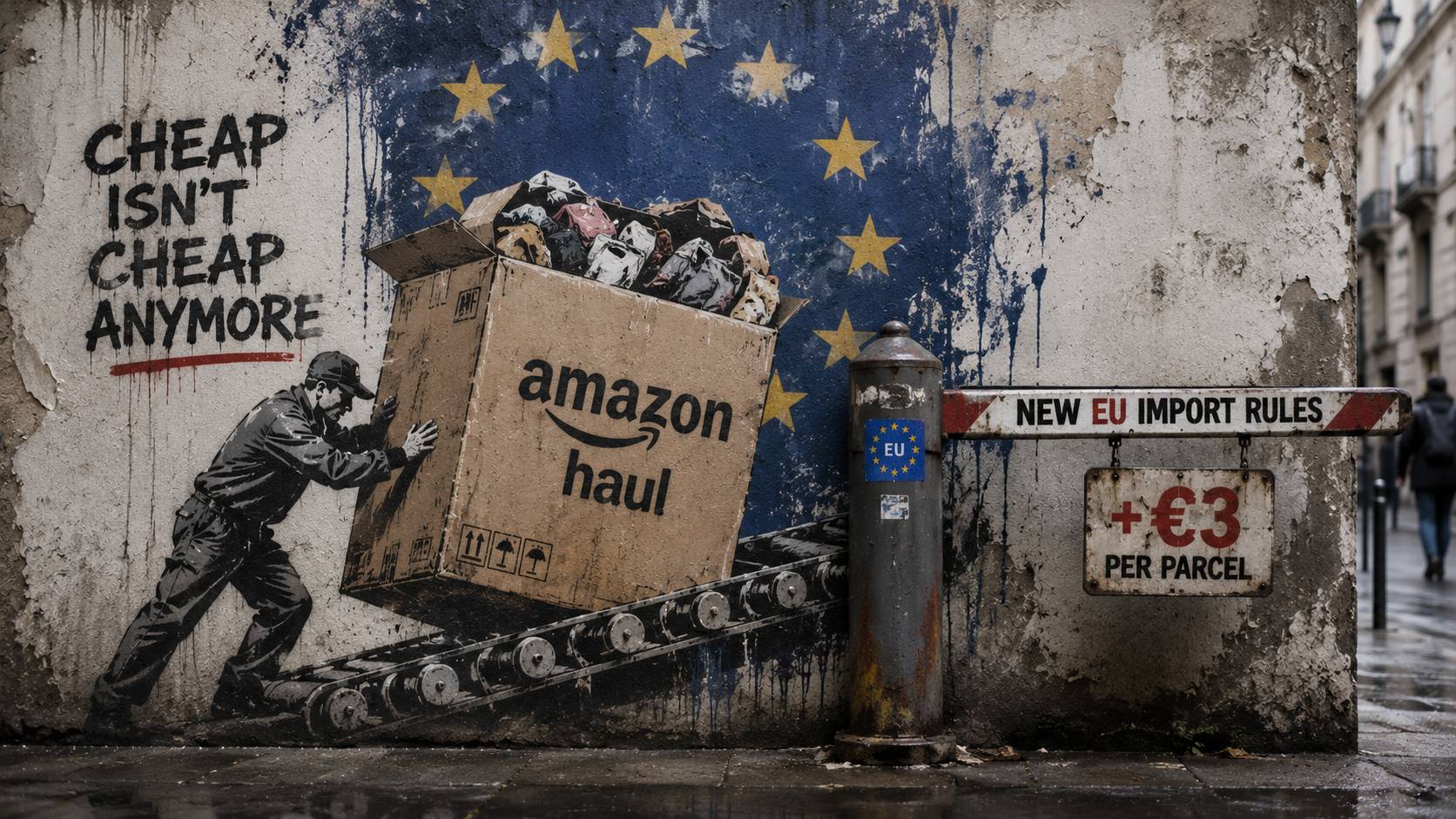
Amazon recently unveiled Haul, a new deep-discount store on its platform aimed squarely at the same bargain-hungry shoppers who flock to Chinese apps like Temu and Shein. Haul’s promise is tantalizing: hundreds of thousands of items for €20 or less, many under €10, all backed by Amazon’s customer service. But just as Amazon put this plan into action the European Union dramatically rewrote the rules of the game. Europe’s changes to import taxes and regulations threaten to wipe out Haul’s cost advantage. Here’s what happened and what it means.
How Amazon Haul Works
Haul launched in the US in late 2024. It’s built around a simple idea: bring high-volume, unbranded Chinese-made goods (think phone cases, jewelry, cheap clothing) directly to consumers at rock-bottom prices. In its debut Haul listed things like a $3 iPhone case or a $14 sweatshirts. Amazon waived its usual “third-party” fees for these cheap items and even put price caps on merchants, e.g. no earrings over $8. For shoppers the catches were minimal: a $3.99 shipping fee under $25 (waived above that) and a wait of 1–2 weeks for delivery. Essentially Amazon let go of margin to gain a share of the fast-growing, price-obsessed market that Temu and Shein had captured.
After a successful US trial Amazon extended Haul overseas in 2025. It went into the UK and Germany early in the year and by autumn into Spain, France and Italy. In each case Amazon’s leaders touted Haul as a way to serve customers “in [that country] who want great products at very low prices”. The expansion isn’t limited to Europe: Canada, Australia, the Middle East and more all saw Haul rollout by late 2025.
In short Amazon bet heavily that Haul could win eyeballs by undercutting Temu and Shein leveraging Amazon’s trusted brand and logistics to sweeten the deal. The company even used its new Shenzhen warehousing system - which lets merchants ship bulk inventory from China to Amazon’s network - to supply Haul.
Europe’s New Import Rules
But as Amazon geared up for this ultra-cheap crusade the EU clamped down on exactly the loopholes that made it possible. The key moves:
VAT on All Packages: Starting July 1 2021, every package entering the EU, no matter how small, must pay VAT. Gone is the old €22 threshold that used to let tiny orders skip taxes. Now if you buy that €3 phone case on Haul, VAT is due (about €0.60 on €3).
€3 Customs Fee: Even bigger, from July 1 2026 the EU charges a flat €3 duty for every low-value parcel (up to €150). Previously any package ≤€150 was duty-free which helped Temu/Shein sell for pennies. Under the new rule that €3 iPhone case now costs €3 more at import. With VAT and this fee it’s essentially double-priced. The plan is temporary - it lasts two years - but it’s a seismic change. Reuters reports the EU saw 5.8 billion duty-free small parcels in 2025 (up from 1.4 billion in 2022) and it expects shipments to fall 10–35% now that fees kick in.
Cheap parcels like these (full of low-priced goods) will no longer enter Europe tax-free. From 2026 each low-value item faces a €3 customs charge plus VAT eroding the price advantage of Haul-like imports.
Product Safety Liability: Europe is also holding online marketplaces responsible for illegal or dangerous items. In May 2026 the EU fined Temu a record €200 million for selling unsafe toys, electronics and more. Amazon’s marketplaces now fall under similar “Digital Services Act” rules: if a product it sells is banned or harmful Amazon can be held liable. In practice this forces Amazon to vet every Haul product rigorously or face fines.
Together these rules mean a cheap Chinese product is no longer free to glide over Europe’s borders. That €5 fashion accessory from China might end up costing €8–9 to sell in Europe after taxes and fees.

Impact on Haul’s Economics
Amazon Haul’s whole selling point is “dirt cheap” plus Amazon reliability. EU’s rules jeopardize that. The €3 fee is particularly damaging because Haul items are small and cheap. For a €5 Haul item a €3 fee is a 60% price hike on top of VAT. If Amazon were eating the fee itself to keep prices down it wipes out almost any margin.
So how can Amazon respond? Its existing European network offers clues. Amazon points out that “97% of its EU shipments” already originate from within Europe. That’s because most Amazon sales (even non-Haul) come from its 70+ EU warehouses. If Amazon shifts Haul stock into these EU centers then selling to European customers becomes a domestic shipment. The €3 fee no longer applies per item (it was only on imports) and delivery is much faster (1–2 days). On the flip side Amazon would pay VAT and duty once on the bulk import plus the cost to store inventory. But the per-item hit is smaller and plannable.
Indeed, this is exactly what Temu and Shein are doing. Temu announced that by using local warehouses it aims to fulfill 80% of EU orders from those hubs. Shein built an enormous EU warehouse in Poland to do the same. Amazon, with its much larger EU fulfillment network, has the same option - and likely will push goods that route if it can.
Stocking Haul products in European warehouses lets Amazon side-step the per-item import fee. In Europe Amazon’s extensive warehouse network means most orders (like normal Amazon orders) ship from inside the EU avoiding the new €3 charge and meeting customers’ demand for faster delivery.
In the near term, however, Haul customers in Europe may notice prices creep up or offers change. For instance some Chinese sellers on Temu have already quietly raised prices (to cover similar U.S. tariff costs). Amazon Haul could see fewer “€2 deals” in Europe after July 2026 unless Amazon deep-subsidizes the cost. In either scenario Haul’s ultra-low-price image takes a hit.
Consumers and Cheap Goods
Why do shoppers flock to Haul/Temu? Speed is giving way to savings. A recent global survey found two-thirds of online shoppers are now prioritizing affordability even over shipping speed. In other words many Europeans will endure 10–15 day delivery if the price is right. Haul’s strategy was built on this insight: “customers would love… ultra-low-priced products even if… they take one to two weeks to arrive” said Amazon.
But Europeans also expect transparency. Under the new rules Haul listings must clearly show VAT and import charges before checkout (and Amazon’s interface says “Price includes duties and VAT” on items shipped from abroad). If shoppers see a €10 Haul item actually costs €15 at checkout some might abandon the purchase. Amazon’s challenge is to keep Haul simple and appealing despite these add-ons.

Competitive and Regulatory Responses
Chinese e-tailers have adjusted quickly. Temu is not panicking - it’s complying by opening warehouses and saying “price includes tax” on EU listings. Shein’s CEO has already warned of “costs going up” due to new EU fees. Meanwhile in the US some states and federal regulators are suing Temu/Shein for not returning excess tariff charges to consumers. This litigation environment signals that once Amazon raises Haul’s prices (even citing tariffs or EU fees) it may be pressured to explain why they won’t come down later.
Amazon itself has substantial flexibility. Its AWS-like expansion into logistics services (Amazon Supply Chain Services) means it can likely operate as its own 3PL. In May 2026 Amazon opened its freight and fulfillment network to all shippers essentially turning itself into a full logistics provider. This could be leveraged to optimize Haul’s supply chain end-to-end - shipping bulk cartons from China into EU for cheap storage and fast turnover versus using slower postal services that attract the €3 fee.
The Outlook for Amazon Haul in Europe
Amazon Haul’s European launch (late 2025) comes at a tough time. Europe’s new import taxes arrive right as Haul hits the market. Our analysis suggests:
Short-term pinch: Haul’s European offerings will either become more expensive (to cover VAT and fees) or Amazon will accept razor-thin margins. The “crazy low prices” tag will be harder to maintain.
Logistics pivot: We expect Amazon to aggressively shift Haul to its EU warehouses. It already does this for 97% of orders. For Haul items that means treating them as a domestic product line even if sourced from China to avoid per-item import costs.
Regulatory compliance: Amazon must double down on quality checks. The hefty Temu fine is a warning - any Haul goods failing EU safety rules could trigger fines on Amazon. So “$2 toys” will likely be heavily vetted.
Marketing adjustments: Amazon may rebrand Haul benefits. Instead of purely price it might pitch “Amazon Haul: Low prices with Amazon’s safe guarantee” to justify any price gaps versus rivals.
The broader picture is that Europe has signaled it will no longer be a free-for-all for Chinese discount apps. By changing VAT and duty rules and by holding marketplaces accountable for product safety regulators have raised the barriers. For Amazon Haul which bet on the old order, the future means adapting to the new normal. In the end, Amazon’s logistical might and deep pockets give it a path forward - but it will have to navigate tighter margins and tougher rules to make this gamble pay off for European shoppers.