Every Click Was an Experiment
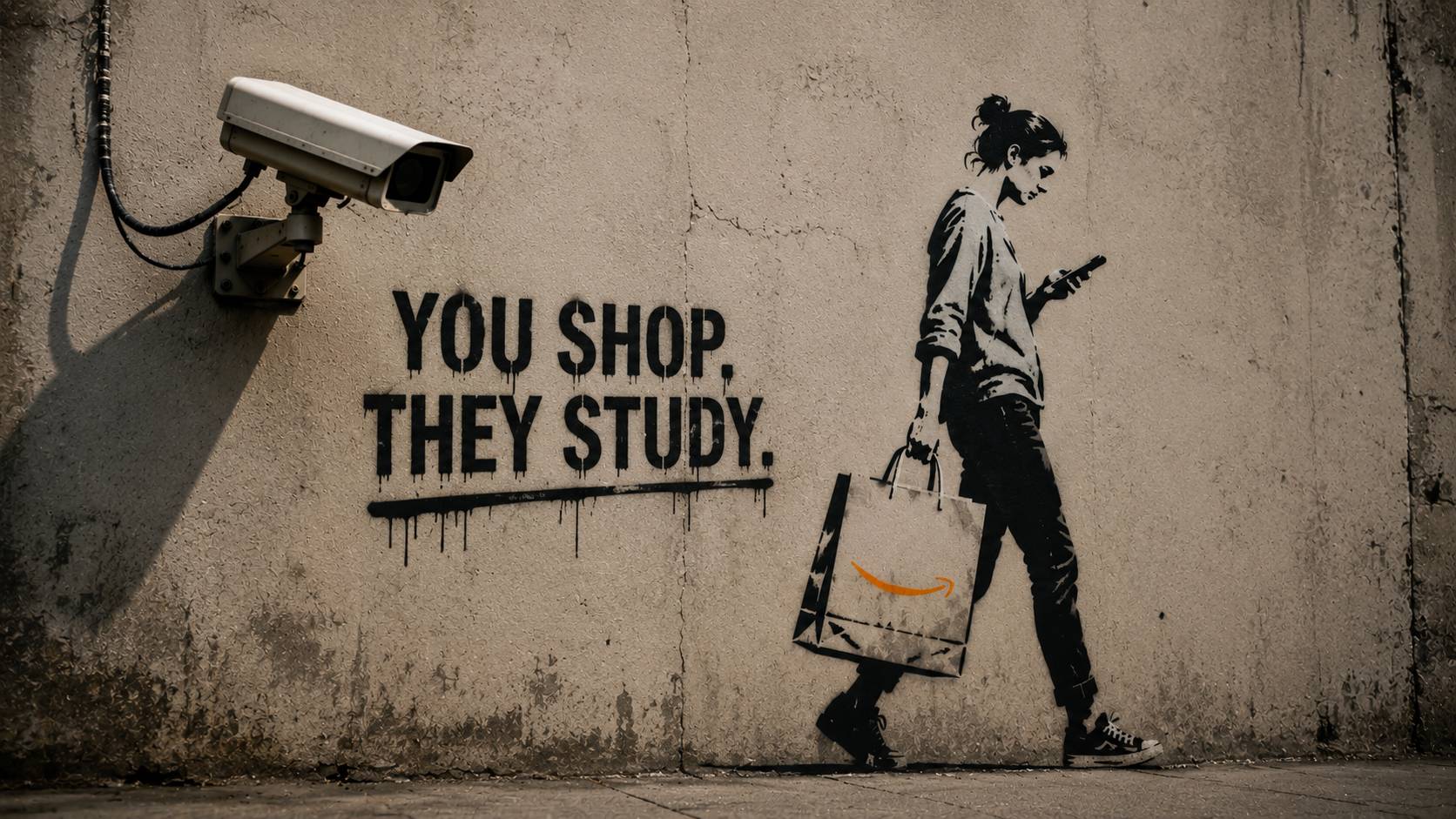
For a long time Prime Day was easy to understand. Amazon discounted thousands of products. People bought things they had been waiting to replace for months. Tech websites published lists of the best deals. Analysts counted the billions of dollars that changed hands before moving on to the next quarterly earnings report.
That was the story.
If you asked someone why Prime Day mattered the answer was usually the same. It was Amazon's biggest sales event of the year. Nothing more complicated than that.
But something has been changing over the last couple of years. The discounts are still there. People still wait for Prime Day before buying a new laptop or upgrading their coffee machine. Brands still fight for visibility. None of that has disappeared.
What's changed is Amazon's objective.
Selling products is still important, obviously. But Prime Day now gives the company something that may be even more valuable than revenue. It gives Amazon a chance to observe millions of shopping decisions happening almost simultaneously inside a marketplace that's becoming increasingly powered by artificial intelligence. That's a very different kind of opportunity. Most companies building AI products struggle with the same problem. They can build impressive demos. They can run limited beta programs. They can invite thousands of users to test new features. What they can't easily recreate is real-world behavior at massive scale.
Amazon can.
Every Prime Day millions of customers arrive with genuine buying intent. They're comparing products, reading reviews, asking questions, changing their minds and making purchases within a relatively short period of time. Those aren't artificial interactions created for testing purposes. They're real decisions involving real money.
If you're trying to understand whether AI changes the way people shop it's difficult to imagine a better environment. That's why this year's Prime Day felt different.
The sales event everyone saw on the surface also became one of the largest AI experiments happening anywhere in retail.
Amazon isn't trying to solve the same problem anymore
There was a time when online shopping had a very simple challenge. Help people find products. Search engines improved. Filters became more sophisticated. Recommendation algorithms got smarter. Eventually the biggest online retailers reached a point where almost anything could be found within seconds. That sounds like success. In reality it created another problem.
Choice.
Search for something ordinary like an office chair and Amazon will happily show you hundreds of options. Search for a portable monitor and you'll probably find more products than you could realistically compare in an afternoon. Even relatively simple purchases have become surprisingly time-consuming because the internet rarely gives you fewer options. It gives you more.
For years retailers assumed that more choice automatically created a better customer experience. Consumers have gradually discovered the opposite. Having endless options often makes buying harder instead of easier. You compare review scores. You open five browser tabs. You read customer comments that completely contradict each other. One reviewer says a product is excellent. Another says it stopped working after two weeks. A third complains about shipping rather than the product itself. Two hours later you're still undecided.
That experience isn't unusual anymore. It's become normal. Amazon knows this.
And that's why AI has become much more interesting than another search filter or another recommendation algorithm. The company isn't simply trying to help customers find products anymore. It's trying to reduce the amount of work required to choose between them. That's a subtle difference. But it changes almost everything.
AI isn't replacing search. It's replacing uncertainty.
The conversation around AI shopping assistants often becomes strangely futuristic. People imagine an AI that knows exactly what they want before they do. That's probably the wrong way to think about it. Most shopping decisions don't require perfect recommendations. They require confidence.
Someone looking for a robot vacuum usually doesn't need Amazon to identify the single best product ever made. They need reassurance that they're buying something reliable without spending the next three hours comparing twenty nearly identical models. The same applies to televisions. Running shoes. Coffee machines. Camping equipment.
The product itself almost becomes secondary. The real problem is uncertainty. Amazon's newer AI features are all moving toward the same goal. Review summaries reduce thousands of opinions into something readable. AI-generated product highlights make long descriptions easier to understand. Rufus allows customers to ask questions naturally instead of relying entirely on keywords.
None of these tools is particularly revolutionary on its own. Taken together, however, they suggest something much bigger. Amazon is slowly changing how decisions happen inside its marketplace. Not overnight. Gradually.
The interesting part is that most customers probably don't even notice it. They simply spend less time searching. Less time comparing. Less time wondering whether they're making the wrong choice.
If AI succeeds that's probably what success looks like. Not a dramatic technological breakthrough. Just a shopping experience that feels slightly easier than it did before.

Prime Day gave Amazon something money can't buy
Every retailer wants more sales. Amazon obviously does too. But revenue only tells part of the story.
Imagine you're building an AI shopping assistant. You can see which recommendations customers clicked. You can measure how long conversations lasted. You know which products people eventually purchased. Those numbers are useful.
Prime Day adds another layer entirely. Suddenly you can observe what happens when millions of people interact with those systems under unusually high pressure. Limited-time discounts create urgency. Customers compare products more quickly. Purchase decisions happen faster. Questions become more specific. Patterns become easier to identify. Some shoppers ignore AI suggestions completely. Others rely on them. Some start conversations before buying. Others use AI only after narrowing their choices.
Every one of those behaviors teaches Amazon something. That's the part that often gets overlooked. People tend to think AI improves because engineers make it smarter. In reality AI also improves because people use it.
Every interaction becomes feedback. Every successful recommendation strengthens future recommendations. Even mistakes are valuable because they reveal where customers lose confidence or where explanations fail to answer important questions.
Prime Day compressed an enormous amount of learning into just a few days. From an AI perspective that's incredibly valuable. Revenue eventually gets reported in quarterly earnings. The behavioral data collected during those shopping sessions may influence Amazon's marketplace for years.
The numbers everyone wanted weren't sales numbers
Every year analysts try to estimate how much Prime Day generated before Amazon says anything publicly. Total sales. Average spending. Best-selling product categories.
Those figures make headlines because they're easy to compare with previous years. This time, though, another set of numbers attracted just as much attention. Did shoppers who interacted with Amazon's AI features buy more often? Did they spend more? Did they discover products they wouldn't have found through a traditional search?
Amazon hasn't published detailed answers to those questions. It may never publish them. The company has little incentive to explain exactly how effective its AI systems are if they become a competitive advantage. But those are almost certainly the numbers Amazon cares about most. Retail has always been a business of small improvements. People sometimes imagine growth coming from dramatic breakthroughs. In reality it often comes from tiny percentage gains repeated millions of times.
If an online store can convince one or two additional shoppers out of every hundred to complete a purchase the financial impact becomes enormous at Amazon's scale. The same applies to average order value.
Imagine someone searching for a standing desk. Instead of buying only the desk they also purchase a monitor arm, a cable organizer and an anti-fatigue mat because Amazon's recommendations feel genuinely useful rather than intrusive. That's a larger basket. Not because Amazon forced another sale. Because the customer believed those products made sense together. That's a subtle distinction but an important one.
The internet has spent years training people to ignore recommendations because so many of them were obviously designed to increase spending. AI changes that equation if the recommendations start feeling more like advice than advertising. That's what Amazon is trying to find out. Not whether AI can sell people more products. Whether it can make buying feel easier.
This isn't only Amazon's race anymore
Amazon may have the biggest marketplace but it isn't the only company thinking this way. Google wants people to ask questions instead of typing keywords. OpenAI has made no secret of its interest in shopping experiences powered by conversational AI. Perplexity has already started experimenting with commerce inside its search experience. Walmart continues investing in personalization and AI-assisted discovery. Even Shopify is building AI tools for merchants who need help writing product descriptions, managing stores and serving customers more efficiently. They're all moving in roughly the same direction.
That's usually a sign that something bigger is happening. For almost twenty years online retail competed on familiar things. Who had lower prices. Who delivered faster. Who offered more products.
Those advantages still matter but they're becoming harder to defend because everyone is improving at the same time. The next competitive advantage may have less to do with logistics and more to do with guidance.
Who helps customers make better decisions?
That question would have sounded strange ten years ago. Today it feels surprisingly relevant. Consumers aren't struggling because they can't find products. They're struggling because there are too many products to compare. That's a completely different problem.

The search box is quietly becoming less important
Think about how people shop in physical stores. Very few walk into an electronics retailer knowing the exact model number they want. They ask questions:
- Which laptop is best for university?
- Is this camera good enough for travel?
- Do I really need the more expensive version?
The conversation usually comes before the purchase. Online shopping reversed that process. Customers had to know enough to perform the right search before they could even begin comparing products. For years we accepted that as normal because there wasn't a better alternative.
Generative AI changes the sequence.
Now shoppers can start with uncertainty instead of certainty. They don't need to know which keywords to type. They only need to describe what they're trying to accomplish. That sounds like a small improvement.
It isn't.
The entire structure of ecommerce has been built around search for decades. If conversation gradually replaces search as the starting point the shopping experience changes in ways that extend far beyond Amazon. Product pages become more important because AI needs reliable information to summarize. Customer reviews become more valuable because AI uses them to identify recurring themes. Clear specifications matter more than clever marketing copy. Even product photography may evolve because AI systems increasingly interpret visual information alongside text.
These aren't changes that happen overnight. But neither did one-click purchasing. Or personalized recommendations. Or two-day shipping.
The technologies that reshape industries usually arrive slowly enough that people don't notice until they look back.
Prime Day may look different in a few years
It's entirely possible that future Prime Days will still revolve around discounts. People like saving money. That isn't changing. But the event itself may serve a much larger purpose inside Amazon. Every year the company will learn a little more about how customers behave. Which questions appear before expensive purchases. Which explanations reduce hesitation. Which recommendations build trust. Which ones don't.
That's valuable knowledge because shopping isn't static.
Customer expectations change. Technology changes. New products appear constantly. AI has to adapt alongside them. Prime Day accelerates that learning process in a way few other events can. From the outside it looks like another successful sales weekend. Inside Amazon it probably looks more like an annual stress test for the future of online shopping.
The bigger shift is easy to miss
People tend to notice technological change when something dramatic happens. A new product launches. A company announces a breakthrough. A completely new category appears. Retail rarely changes that way. Most of the important shifts happen quietly. Recommendations become a little better. Search becomes a little smarter. Returns become a little less common. Customers spend a little less time deciding what to buy.
None of those improvements generates headlines on its own. Together, they reshape an entire industry.
That's why Prime Day deserves a closer look this year. The discounts were real. The record sales probably were too. But they may not be the most important outcome.
The more interesting story is that Amazon used one of the busiest shopping events in the world to observe how artificial intelligence behaves when millions of real customers make real purchasing decisions. Whether AI significantly increased conversion rates or average order value is something only Amazon can answer with certainty. Publicly the evidence simply isn't there yet. Even so, it's difficult to ignore the direction of travel.
Amazon isn't investing billions of dollars in AI because it wants shopping to feel more futuristic. It's investing because it believes better decisions eventually become better business. That's a different way of thinking about ecommerce.
For years the industry focused on bringing more people into online stores. The next decade may be defined by helping those people decide what to buy once they arrive. If that turns out to be true, Prime Day 2026 won't be remembered only as another successful sales event. It will be remembered as the moment Amazon started treating its biggest shopping event as something else entirely.
A live laboratory for the future of commerce.