Published on 03.01.2026 • ~22 min. reading
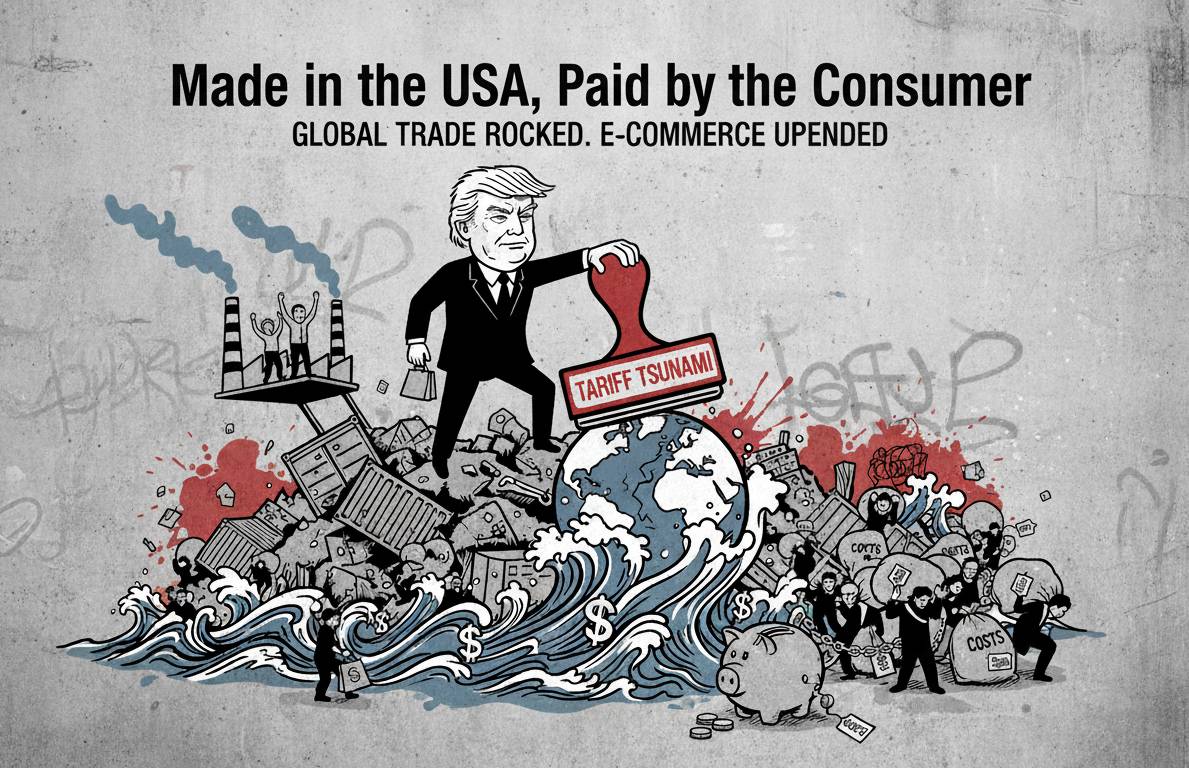
When Donald Trump made a comeback at the White House in 2025, he did not hesitate to usher in a "tariff tsunami" which disrupted worldwide trade and the effects were felt profoundly in e, commerce. In an instant, imports that vied for almost duty, free access were slapped with substantial duties. As an illustration, a nearly universal 10% baseline tariff on almost all imports was imposed on April 5, 2025, and was accompanied by significantly higher "reciprocal" tariffs on major trade partners. Thus, countries and products that were lightly taxed underwent double, digit levies, and in some cases, triple, digit tariffs. The U.S. average tariff rate was raised by this move to the highest level in a hundred years, as remarked by economists. In fact, one trade lawyer referred to it as "the single biggest trade action of our lifetime". These alterations overturned the playing field for e, commerce brands and agencies. The cost of shipping in trendy gadgets, apparel, home goods, and other commodities could skyrocket all of a sudden. Companies were put in a situation where they had to make a run for it: a survey revealed that 81% of e, commerce decision, makers were concerned that new tariffs would disrupt their global strategy. In the intervening period, costs have gone up, supply chains have broken down, and pricing strategies have been changed. Treasury Secretary Janet Yellen called the tariffs "too high, too broad, and too quick", which resulted in a trade war no one wanted. Let's unpack the major plays in Trump's 2024, 25 tariff offensive and figure out who wins and who gets the short end of the stick.
Trump's tariff mega, wave: What changed in 2024 - 2025
Trump's trade policy in his second term was extremely tough. He declared a "national emergency" on trade and ordered the use of the full extent of his powers to put tariffs on imports from nearly every country. The main move was a 10% flat tariff on almost all non, US goods which was enforced on April 5, 2025. Countries like Australia, Britain, Saudi Arabia, and Colombia (many of which actually have trade deficits with the U.S.) were suddenly paying this new tariff. Simultaneously, Trump halted all tariff schedules that had already been planned for 90 days basically giving a minimum of 10% to any country not exempted. His next step was "reciprocal" tariffs with higher rates on the biggest trading partners, which he announced using his executive authority. Some countries had to deal with duties ranging from 20 to 50% on their exports to the U.S. starting a few days later. To illustrate, the European Union (a major U.S. exporter) ended up with a tariff of around 20%; Japan and South Korea each had a rate of 15%. Tiny trade, surplus countries had it even worse (Switzerland, for instance, went to 39%). Among all, China was the hardest hit: in April, the Chinese commodities sent to the U.S. were charged a total of about 145% in tariffs (a 20% "fentanyl" tariff plus a 125% "reciprocal" tariff). These excruciating rates essentially closed the door to U.S. markets for most Chinese products or forced Chinese factories to take huge losses if they wanted to keep their market share. Some of the significant changes to tariffs were that steel, aluminum, and copper products would be subject to a 50% levy, and imported cars and car parts would be subject to 25% tariffs. (The steel and auto tariffs were basically the same as the earlier Section 232 tariffs but with a double effect on those sectors.)
On the compliance front, Trump also did away with the long, established "de minimis" rule for China and Hong Kong (and finally for the whole world). The $800 duty, free limit which is of great importance to low, priced cross, border e, commerce was done away with. After May 2025, each imported parcel from China must be fully custom, entered and duties paid. This single action wiped out a great cost advantage that many small e, commerce orders used to have. In a nutshell, by the middle of 2025, the U.S. had imposed tariffs of 10% or more on about 70% of all imported goods, and there were huge new duties in dozens of product categories. In total, the Tax Foundation called Trump's 2025 tariffs "the largest US tax increase as a percent of GDP" in decades. The immediate effect of this for brand owners and shoppers was the same, a spike in import prices, supply chain difficulties, and the uncertainty as to which costs would skyrocket next.
Who Benefits from the New Tariffs?
The tariffs were a measure to support some U.S. industries and to change the trading patterns. A few definite winners were there, in fact: Domestic Heavy Industry. U.S. producers of steel, aluminum, copper and other related metals benefit from the
50% tariffs on the foreign competitors. Import duties increase the price of steel brought from overseas in the U.S., therefore, domestic mills gain pricing power. (Besides, some critical mineral and lumber products were also given new protections.) Automakers & Parts Makers. The 25% tariff on cars and parts from outside the U.S. was meant to be the advantage for American auto companies by elevating the price of foreign cars. (However, domestic automakers are still heavily dependent on global supply chains, so the gain is only partial.) Nevertheless, U.S. auto labor unions welcomed the move as making the playing field fair. Allied Exporters (With Deals). Not every country had to bear the full impact of Trump's tariffs. Some U.S. trading partners negotiated new agreements. For instance, the UK got a special deal that kept its tariff at 10%, and the EU, Japan and South Korea limited their exposure to 15%. These concessions mean that exporters in these countries are relatively less pressured by new measures compared to nations without any deal. These deals from the U.S. standpoint may ease relations, but at the same time, they represent victories for the exporters of those countries (their governments will emphasize that they have avoided even higher tariffs). Government Coffers.
Tariffs are taxes on imports, and the revenue is collected by the U.S. Treasury. The enormous 2025 tariffs pushed the U.S. tariff revenues to more than $30 billion per month (compared to under $10B earlier in 2024). By the end of 2025, some estimates indicate that nearly $250 billion had been generated through tariffs. These monetary resources could be employed for infrastructure or for giving tax relief. (It remains to be seen if they will be redirected in ways that benefit consumers, but on paper, the government "wins" in terms of extra revenue.) Some Supply Chain & Logistics Firms. The indirect group of winners may be certain logistics providers and border specialists. The companies that help manage imports customs brokers, freight forwarders, tariff consultancy firms, etc. had more work due to the choppy trade situation. E, commerce brands suddenly needed help in re, routing shipments, navigating new regulations, and filing duties. Firms that offer trade, compliance expertise (like 3PL companies) took the opportunity to become indispensable partners in this environment. Domestic, Focus Brands. The smaller U.S. brands which were already producing domestically or sourcing from non, tariffed countries got a competitive lift. If you were selling "Made in USA" apparel or home goods, then at Walmart or Amazon you would have faced less competition from abroad. Even beyond manufacturing, service sectors (such as domestic IT or consultancy) that indirectly benefit when the production focus shifts home might be there too. Moreover, certain commodity imports like crude oil and drugs were mostly exempt from the new tariffs, so industries relying on those (energy, pharma) did not experience cost increases due to these policies. To sum it up, the core "winners" were mostly domestic producers in the targeted sectors and any exporters that bargained favorable terms. Many Americans viewed these as victories for U.S. industry, and Trump often lauded them as such. But bear in mind, these "wins" usually come at the cost of other players further down the chain (and ultimately U.S. consumers).

Who Gets Hit: The Big Losers
While a few people benefitted, under the new regime many more suffered. Generally speaking, tariffs are a kind of tax on those who buy imports. For e, commerce brands, that means higher costs and more difficult logistics directly. The main losers are: Import, Heavy Businesses and Retailers. The companies that relied on cheap foreign, made products were forced to pay for sudden cost hikes. Suppose there was an online retailer who sourced inexpensive toys from China as a result of the tariffs, the landed cost of those toys could have increased by 10%, 20%, or even 145% overnight. The seller either takes the hit (margins get squeezed) or passes it to customers. There were reports that retailers like Walmart and Target raised prices by 5% or more on many goods in 2025, and small e, tailers were under similar pressure. The Passport survey showed that e, commerce brands considered "higher costs, supply chain disruptions, and stricter customs requirements" as their biggest challenges at the moment. Consumers (You and Me). In the end, it is American shoppers who pay the bill. Every tariff imposed is a tax that is passed along the supply chain. Several analysts have pointed out that these tariffs are actually a hidden tax on U.S. consumers. One expert jokingly called them the "single biggest U.S. tax increase" since 1993. Real, life examples of "empty shelves and higher prices" began to surface for everything from toys to kitchen appliances. Overall, economists warn that tariffs result in higher inflation the Council on Foreign Relations warned that the measures would operate like an "effective tax on consumers and businesses". The US inflation rate indeed went up in mid, 2025 when these increased import costs started to be felt. China Exporters and Factories. China was the most severely punished among all. Chinese sellers saw up to 145% tariffs slapped on the majority of their goods. For most product categories, this situation forced Chinese factories to either incur heavy losses or give up the U.S. market. (To be sure, some high, tech electronics phones, computers, etc. were temporarily exempted, but almost all of the lower, tech items are very expensive now in the U.S.) The end of de minimis was especially painful for small Chinese exporters who sold DTC goods to U.S. buyers; low, value orders that used to go under the radar are now fully taxable and bureaucratic. Developing Exporters (Vietnam, Indonesia, etc.).
It turned out that several Southeast Asian countries were also heavily hit with tariffs. For example, Vietnam, Indonesia and the Philippines, which export a lot of goods to the U.S., were taxed at about 1920% for a wide range of products. Thus, the main export sectors from those countries apparel, footwear, electronics and even agricultural products became more expensive in the American market. Unlike the UK and Japan, these countries had no special agreement with the U.S. and were combined in the higher tariff groups. The sudden leap in duties meant sales losses or the necessity to renegotiate prices downward (thus the profit margin shrinks) for the businesses that supply global brands in those countries. Allies Export Industries. Even the friendly U.S. allies were not spared the new troubles. The EU, Japan, and S. Korea had their main exports (cars, machinery, chemicals, etc.) hit by 15% tariffs. That is a little bit more than 10%, the rate they were used to, therefore their exporters are slightly worse off. Canada and Mexico were not affected by the 10% baseline but still have to deal with 2535% tariffs on goods that don't meet USMCA rules. In essence, very few exporters worldwide remained unaffected. The ones spared the baseline did so mostly because of their location or arrangements; the majority of others are "losers" to some degree. U.S. Exporters via Retaliation. It is worth mentioning that foreign governments replied with their own tariffs. For instance, China immediately implemented its own levies (i.e., an extra 34% on all U.S. imports). Europe, India and other countries warned that they would retaliate by imposing tariffs on U.S. exports like soybeans, pork, aircraft parts, etc. Cost, wise, the U.S. farmers and manufacturers are potentially losing the game of exports.
Many Americans might think that the steel will get more expensive and the jobs will be easier locally, but U.S. companies that rely on exports are the ones facing the drying up of the markets or their customers turning to non, U.S. suppliers. (This side effect means that American exporters, i.e., a "loser group" in global trade, are now confronted with new barriers overseas.) Small E, Commerce Sellers & Hobby Importers. The small, time cross, border shoppers and marketplace sellers who are the less obvious victims might be the small, time cross, border shoppers and marketplace sellers who are the less obvious victims. Prior to 2025, it was possible to send a <$800 book or gadget from overseas without incurring a duty. Now, every small package is caught in customs. Therefore, if you were drop, shipping cheap items from AliExpress or Taobao, your entire business model was being destroyed. Consumers encountered customs delays and fees on small orders, often without even being aware of it. The demise of duty, free micro, shipments probably will have a scaring effect on niche online businesses. Overall Economy. Apart from the specific industries that are affected, many economists and analysts consider these tariffs to be a drag on the U.S. economy. According to a study by the Peterson Institute, the tariffs would result in "a smaller U.S. economy with higher U.S. prices and lower American wages". The real data began to confirm that: by late 2025, the level of corporate bankruptcies in the U.S. that had not been seen since 2010, increased substantially with many companies citing tariff, driven cost shocks as a major reason. In other words, across the board industries, small businesses, and everyday consumers all felt the effects of the tariffs.
Supply Chains and Pricing: Major Impacts
For e, commerce brands, the supply chain effects have been profound. After years of lean, just, in, time imports, the new tariffs forced quick strategic shifts:
Rethinking Suppliers: Many brands are scrambling to diversify away from high, tariff sources. If all your gear came from China or Southeast Asia, you have to ask new questions. Some companies are shifting orders to other low, cost markets (India, Mexico, Eastern Europe, etc.), hoping those goods either face lower U.S. tariffs or can enter via free, trade routes. Others are reshoring bringing some production back to the U.S. (often for key components) or using U.S. distribution centers. In fact, preliminary data showed a bump in U.S. foreign direct investment (20% growth in 2024) as firms commit to domestic manufacturing. The upshot for brands: build a more flexible supply chain, even if it means higher upfront costs.
Front, Loading Inventory: In the months leading up to the tariff deadlines, a common tactic was to accelerate shipments. Many companies rushed to import extra stock in early 2025 to lock in lower duties (or avoid them entirely). This kept some shelves stocked and delayed price hikes initially. As Euromonitor noted, this surge in front, loading shipments in H1 2025 has helped shield US consumers from price spikes but only temporarily. After those extra inventories ran out, prices began to climb. Brands should be cautious about hoarding too much (which ties up capital) but also recognize that uncertain policy means planning buys well in advance.
Increased Costs & Price Pass, Through: With tariffs, landed costs of imported goods jumped. Many e, commerce brands face a squeeze: either absorb the extra dollars or increase consumer prices. In practice, large retailers and manufacturers have often passed on the bulk of the cost. In 2025 we saw announcements of price increases across the board (for example, some consumer, goods giants said theyd raise U.S. prices ~5% to cover tariffs). For smaller brands, raising prices risks losing business, so they either had to cut margins or find efficiencies. The general effect is that wholesale pricing and retail pricing both crept upward, squeezing consumers and brands alike.
Complex Customs and Compliance: The end of de minimis for China/Hong Kong (and plans to eliminate it globally) means every parcel now triggers customs paperwork. E, commerce shipments from overseas must clear customs like bulk freight this adds time and expense. Many brands have started working with customs brokers or moving to bonded warehouses to manage the burden. The added friction (and potential delays) has also led some companies to hold more safety stock domestically, or shift to fulfillment centers closer to customers.
Logistics Shifts: Carriers and freight routes have changed. For example, the U.S. introduced steep new fees on postal shipments from China (up to $200/item by June 2025). As a result, many companies moved away from international postal services, opting for express couriers or air freight with different duty structures. Some brands also started shipping in larger consolidated shipments to split duties over more units, reducing per, item costs. Overall, the logistics puzzle got more complicated and costly, pressing brand owners to optimize every leg of the journey.
The combined effect of these changes is a much bumpier and more expensive supply chain. Brands that adapt by diversifying sources, stocking strategically, and getting smart about customs can survive but the era of relying on duty, free imports is clearly over.
Consumer Demand and Global Competitiveness
Tariffs dont just affect pricing and supply they reshape demand and global market dynamics:
Consumer Demand: Higher prices typically mean lower demand. Some U.S. consumers began buying less or looking for alternatives (e.g. substituting domestic goods or simply cutting non, essential purchases). With inflation edging up, consumer sentiment dipped. The strain on budgets was notable: surveys in late 2025 recorded pockets of shortages (so, called empty shelves) and sticker shock on previously cheap imports. As one trade economist warned, these tariffs are basically a tax on U.S. households, taking a bite out of purchasing power. In response, retailers and e, commerce sites had to work extra hard on promotions, bundling, or adding value (free shipping, warranties, etc.) to justify the new prices.
Global Competitiveness: On the international stage, U.S. goods and companies faced new headwinds. Foreign buyers saw U.S. products become relatively more expensive (often due to retaliatory tariffs). For example, after China hit U.S. goods with its own duties, American manufacturers of soybean, pork, and electronics found their products less competitive in Chinas market. Meanwhile, other countries began forging tighter trade ties among themselves. The U.S. saw some of its influence erode: analysts noted that global GDP growth slipped as trade friction increased. Companies worldwide started building supply chains that avoid the U.S. tariffs for instance, China started routing some exports through Southeast Asia into the U.S., and there were new regional trade deals (like the mid, 2025 UK, India tariff pact) as countries sought to mitigate U.S. policy shocks.
In short, these tariffs made the global market more fragmented. U.S. exporters lost some customers, and overseas producers found ways to sidestep U.S. tariffs. Many economists argue that this reduces overall economic efficiency: it slows capital flows and raises costs for everyone. As the Peterson Institute put it, the tariffs would leave the U.S. with higher prices and a less open economy over time. In other words, the gains to one sector may end up as losses elsewhere in the economy.
Takeaways for e-Commerce
So what can e, commerce brand owners and their agencies do in this new landscape? Here are some key insights and actions:
Revisit Pricing and Costs: Be proactive about pricing. As the data shows, many companies need to raise prices to survive. Dont wait until costs drain your margins. Instead, work out your duty impact now and build it into your pricing models. Consider surcharges (or import fees) on checkout if margins are razor, thin. At a minimum, update your cost sheets and pricing algorithms to reflect the tariffs on each product. According to industry analysts, companies must rethink pricing and fulfillment before margins take a hit.
Diversify Your Sourcing: Relying on a single country for all your products is riskier than ever. If you used to source only from China, for example, explore alternatives: Vietnam, India, Mexico, or even back to U.S. manufacturing. Prioritize suppliers that can offer Made, in, USA components or content (USMCA rules allow some auto parts to bypass tariffs, for instance). Establish relationships in multiple regions so that if one gets more tariffed, you have backups. Even minor shifts can pay off moving 1020% of your volume to a lower, tariff country could significantly lower costs. As one analyst put it, companies are now getting a fresh push to reshore and diversify supply chains.
Leverage Trade Agreements and Exemptions: Make the most of existing trade rules. For example, if you import from Mexico or Canada, ensure your products meet USMCA rules so you arent caught in the higher duties. Check if any of your goods qualify for tariff exemptions (like the ones on certain electronics or fabrics). Work with a customs expert to properly classify your products under the right HTS codes; even a small misclassification can lead to huge penalties now. In short, know the details of the new law its too costly to rely on guesswork. As the Commerce Department has emphasized, precise compliance is now a competitive advantage.
Optimize Logistics and Inventory: Since the tariff regime introduced supply shocks, brand owners should be smart about inventory. This could mean importing in larger batches (to average out duties) or stockpiling critical items that might sell out. On the flip side, avoid overstocking goods that might decline in value. Consider using bonded warehouses or foreign, trade zones where duties are deferred until goods enter the U.S. market. Also, minimize shipping costs by consolidating shipments (fewer, fuller containers or pallets can save on per, unit duty and freight). Dont forget that duties are often ad valorem (percentage of value), so shipping more units in fewer packages can cut costs.
Strengthen Border Compliance: The new rules mean extra paperwork. Partner with a reliable customs broker or 3PL that knows the latest U.S. requirements. They can handle tasks like filing duties, obtaining refunds (sometimes duties can be refunded if goods are returned), and dealing with inspections. For example, if you ship goods to multiple states, you might consider using an In, Bond Importation to a central warehouse, then do domestic shipments (which avoids paying duties on goods that stay in the country). Also watch for any updates there have already been delays and amendments (some tariffs got paused or changed after the initial shock). Staying agile on compliance will save headaches.
Communicate Clearly with Customers: If you have to raise prices or face shipping delays, let your customers know why. Transparency can earn goodwill. For instance, you could flag products with an import surcharge or note longer delivery times due to customs checks. Framing it as due to new trade regulations is factual and usually understood. Agencies should help client brands craft these messages carefully nobody likes a surprise fee at checkout, but customers can be sympathetic if costs genuinely went up.
Monitor Policy and Advocate: Tariff policy is still evolving. Many country, specific rates have been paused or negotiated since 2025 (as of late 2025, the U.S. extended a China tariff truce to November). Keep an eye on trade news; rules can change with new deals or court rulings. Also, consider joining industry associations or lobby groups collective pressure can sometimes restore exemptions or delay planned hikes. (For example, some retailers have petitioned for new duty, free levels on small parcels.) At a minimum, make sure you or your agency is plugged into sources like trade compliance newsletters or briefings.
Plan for the Long Term: These tariffs may not be permanent, but theyve already rewritten the playbook. In the meantime, the trend is clear: more expensive imports and more complex regulations. Think long, term resilience. This could mean investing in U.S. production (which might come with subsidies), or reorienting some of your business model toward markets that have lower barriers. It could also mean doubling down on digital differentiation if your product is unique enough, customers may tolerate higher prices.
Seize Any Opportunities: Believe it or not, new regulations can open up niches. For example, Made in USA labeling has become a bigger selling point. Some brands are developing new nearshore supplier lists or tech solutions (like automated duty, calculators) that they can offer to customers. E, commerce agencies might create tariff, education content, logistics optimization packages, or cross, border selling services in response. Being among the first to adapt and communicate a savvy strategy can strengthen client relationships and even attract new business.
Looking Ahead
Trumps 2024-25 tariffs have undeniably stirred the pot for global commerce and ecommerce alike. The broad picture is mixed: certain U.S. industries get breathing room, but many other sectors pay the price through higher costs and disrupted trade. For e, commerce, the key lesson is agility. Companies that swiftly recalibrate sourcing, cost models, and logistics stand a better chance of weathering the storm.
Even if these policies shift under future administrations or trade agreements, the takeaways remain useful. Trade dynamics are in flux, and supply chains are being fundamentally rethought. By staying informed, adaptable, and customer, focused, e, commerce brands can turn these challenges into competitive advantages. After all, every tariff spike is a signal to innovate whether that means finding new supplier partnerships, offering unique U.S., made alternatives, or simply becoming experts at border compliance. In this high, tariff era, the winners will be those who move quickly, plan ahead, and keep their customers happy and the losers will be those, caught flat, footed by the changes.