The Algorithm Is the New Store. You’re Just the Wallet.
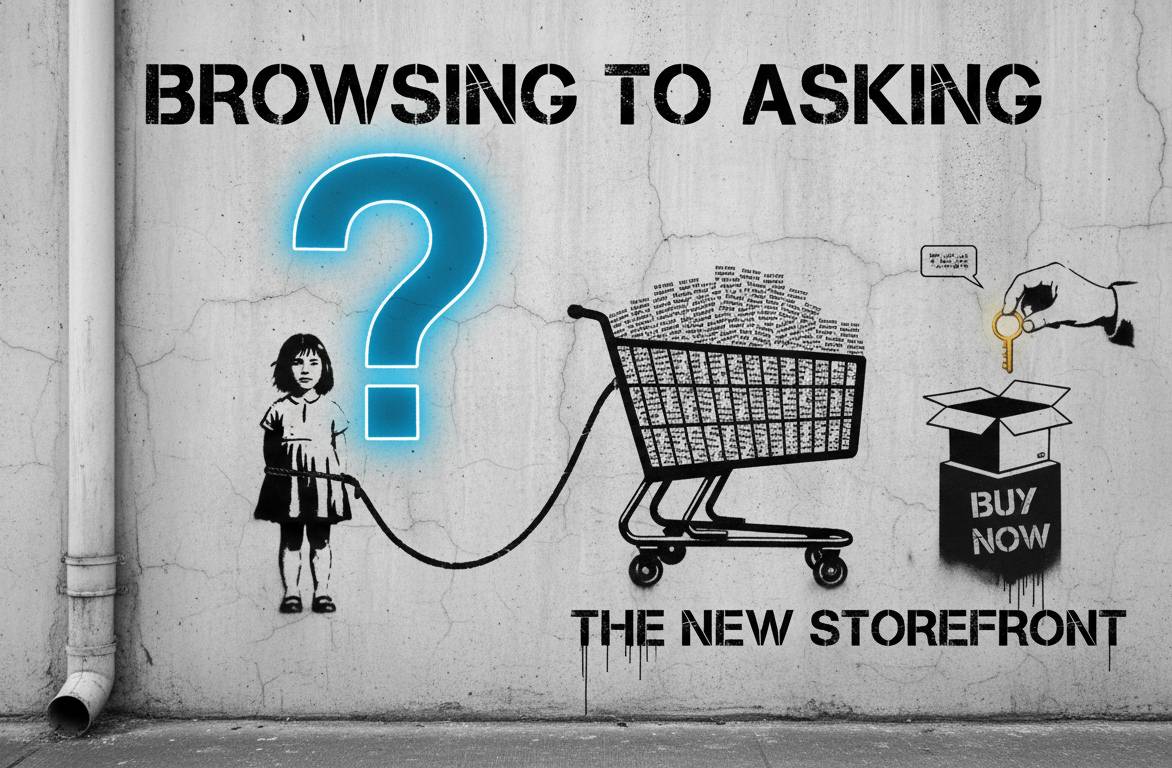
If you’ve bought anything online in the last twenty years you probably followed the same routine without even thinking about it. You search for a product. You open a few tabs. You skim some reviews. You compare prices. Maybe you get distracted halfway through and come back later. Eventually you pick something. That basic flow - browse, compare, decide - has quietly defined ecommerce since the early days of Amazon and eBay. Entire industries grew around optimizing it. Designers obsessed over product pages. Marketers fought for better search rankings. Retailers experimented endlessly with layouts, images, and review sections.
But something interesting has started happening recently. Instead of browsing people are starting to ask. Not search in the traditional sense. Ask.
And instead of a page full of links an AI gives them an answer. Sometimes it even explains the reasoning. That tiny change, from searching to asking, may end up reshaping how online shopping works. Because when an AI recommends a few products directly the product page stops being the place where discovery happens. The recommendation becomes the storefront.
The way online shopping has always worked
For most of ecommerce history shopping online basically copied the structure of physical stores. Instead of aisles you had categories. Instead of shelves you had product grids. You scrolled, clicked and gradually narrowed things down. That’s why product detail pages became so important. They were the moment where browsing turned into decision-making. A good product page showed you everything you needed: photos, specs, reviews, maybe a few comparison charts.
If you worked in ecommerce you probably spent a lot of time thinking about that page. Should the reviews appear higher? Are the images big enough? Is the “Add to Cart” button obvious? For years improving that page was one of the most reliable ways to increase sales. But there's an assumption baked into that entire system: the customer is doing the research themselves.
The quiet shift from browsing to asking
AI changes that dynamic. Instead of opening ten tabs and doing the comparison work yourself you can just ask a question and let the assistant do the filtering. That might not sound revolutionary at first. But if you think about how people actually shop online it solves one of the biggest frustrations: too many options. Try searching for something simple like “running shoes.” You’ll get thousands of results. Even after filtering by price, brand and rating you’re still staring at dozens of options that all look… kind of similar. This is something researchers have studied for years. When people are faced with too many choices decision-making actually becomes harder. More options don’t necessarily make us happier - they often make us overwhelmed.
AI assistants remove that friction. Instead of showing you fifty options they show you three. And once that becomes the starting point of the shopping experience everything else begins to change.
When the conversation becomes the store
Think about what happens when you walk into a physical store and ask someone who works there for advice. You don’t expect them to show you every single product in the building. You expect them to narrow things down and say something like: “Most people go with this one. But if you want something lighter, this is a good option too.” That’s basically what AI is starting to do online. You ask a question. The assistant looks at reviews, product specs and pricing. Then it suggests a handful of options and explains why they’re worth considering. By the time you click on a product page the decision has already been partially made. The page isn’t where discovery happens anymore. It’s just where you double-check the details.

The strange new rules of visibility
This shift creates a completely different kind of competition between products. Traditional search engines show long lists of results. Even if your product isn’t the top result it still appears somewhere on the page.
AI assistants don’t work that way. They usually recommend only a few products. Three. Maybe five. That means the difference between being recommended and not being recommended could be enormous. In the old ecommerce world a product could still get traffic even if it ranked lower. In the AI-driven world products that don’t make the shortlist might effectively disappear from the shopper’s view. You could think of it as a new kind of shelf space - except the shelf belongs to an algorithm.
Product pages aren’t disappearing (but they are changing)
Ironically product pages probably aren’t going away anytime soon. But their job is changing. For years product pages were designed almost entirely for humans. They were marketing tools meant to persuade a visitor to buy.
Now they also serve another purpose: feeding information to machines. AI systems rely on product pages to understand what a product actually is. They analyze the specs, descriptions, materials, compatibility details and reviews. All of that information helps the AI figure out whether a product fits a particular recommendation. In other words product pages are slowly turning into structured data sources. They still need to convince people. But they also need to make sense to the algorithms.
Reviews suddenly matter even more
If there’s one thing AI seems to love analyzing it’s reviews. Humans read reviews one at a time. Maybe we skim a few and try to get a general impression. AI can read thousands instantly. It looks for patterns. If hundreds of customers say the same thing - that a chair is comfortable, that a phone battery lasts forever or that a backpack zipper breaks easily - the AI notices. Then it summarizes those patterns for the shopper. Instead of reading fifty comments you might see a simple explanation like: “Customers love the comfort but say the assembly instructions could be clearer.” Those kinds of summaries are surprisingly powerful. They condense the experience of hundreds of buyers into a single sentence. And because of that reviews may become one of the most important signals in AI-driven shopping.
Branding might work differently
Here's something a lot of brands may not love hearing. In an AI recommendation visual branding often plays a smaller role. When we browse product grids packaging and photography matter a lot. Bright colors, recognizable logos and attractive design help products stand out. But AI assistants mostly describe products through their features and reputation. They talk about durability, performance, value and customer satisfaction. The brand still matters, of course. But it becomes one factor among many rather than the thing that immediately catches your eye. Interestingly that might make the physical experience of the product even more important. When the package arrives and the customer opens it that's where the brand finally gets its moment.

The future might be even stranger
If AI shopping assistants keep improving recommendations may only be the beginning. Imagine telling your assistant something simple like: “Order more coffee when I run out.” Or: “Always buy the best price on printer ink.” The assistant monitors your usage, compares prices across retailers and places the order automatically.
You don’t search. You don’t compare. You don’t even think about it. The purchase just happens.
At that point shopping becomes something that happens quietly in the background - managed by software rather than by people scrolling through websites.
The storefront might just be a conversation
None of this means websites are going away. People will still visit them, explore brands and research bigger purchases. But the very beginning of the shopping journey may move somewhere else. Instead of browsing categories and clicking product pages more people will start with a question. And the answer to that question will shape everything that happens next. In that sense the storefront of the future may not look like a storefront at all. It might just look like a conversation.